Recipe by
Sophia Martinez
Pastry enthusiast and home baker. I test every recipe at least 3 times before publishing so you get reliable results every time. Learn more about Sophia →
Rich coffee, delicate crunch, and that little wobble of sweetness when you bite in espresso macarons feel like a fancy bakery secret, but they’re totally doable at home. They’re elegant, deeply flavorful, and way more forgiving than you think.
I started making these back in 2019 after visiting a little patisserie in Seattle where the barista handed me one with my latte. The way the espresso buttercream melted into the shell stayed with me for weeks. After testing the recipe a dozen times on this blog, I figured out the trick: don’t overmix the batter, and let them rest before baking so those signature “feet” form perfectly.
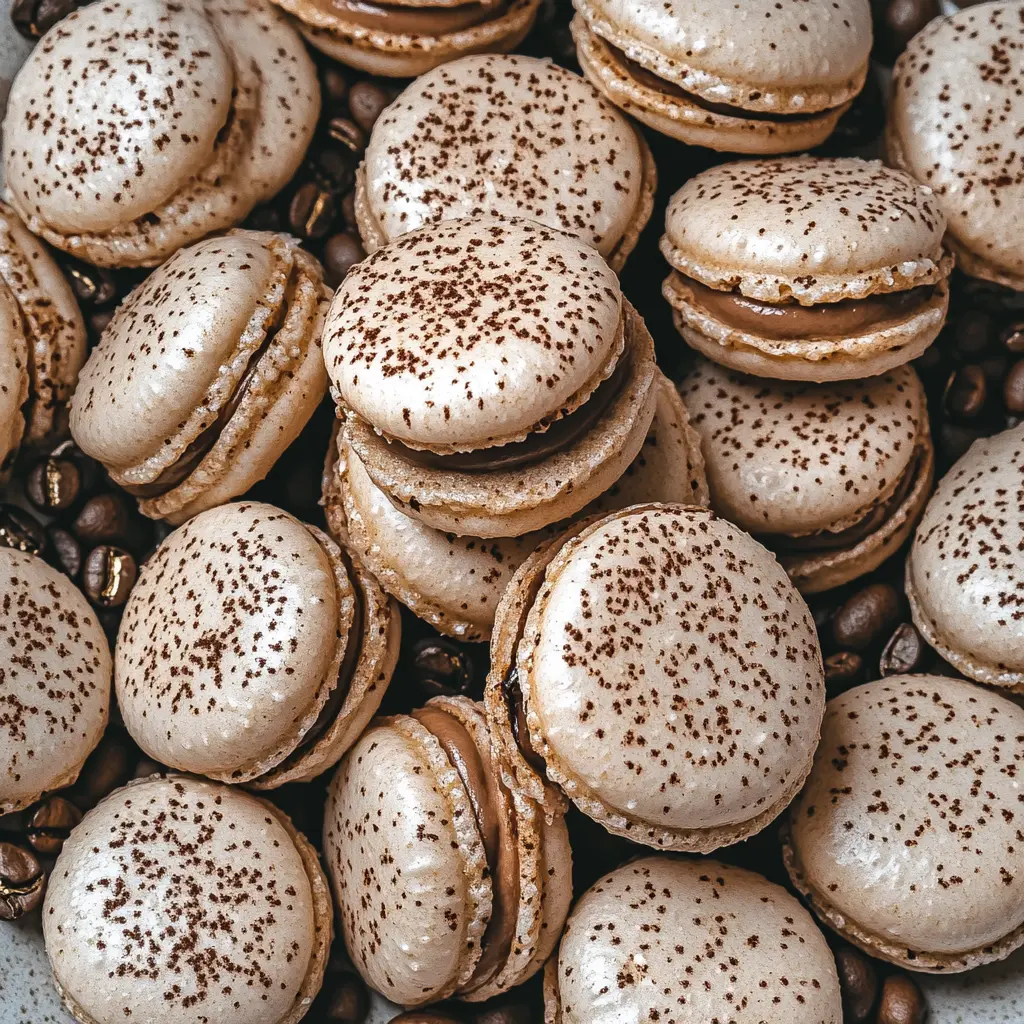
Espresso Macarons Recipe Easy Steps for Perfect Results
Ingredients
Method
- Combine almond flour, powdered sugar, and espresso powder by sifting them together into a bowl and set aside.
- Using a stand mixer with a whisk attachment, whip the egg whites on medium speed until foamy; add the cream of tartar.
- Increase mixer speed to medium-high and slowly blend in granulated sugar to avoid deflating the meringue; then whisk at high speed until stiff peaks form.
- Carefully fold half of the dry ingredients into the meringue with a spatula until blended, then fold in the remainder until the batter flows like lava and can form a figure 8 without breaking.
- Prepare a baking sheet lined with a silicone mat or parchment; fill a piping bag with batter and pipe 1-inch rounds straight down onto the mat.
- Lift the baking sheet and firmly drop it on the counter 3 to 4 times to remove air bubbles; pop any bubbles with a toothpick for a smooth surface.
- Let the piped batter rest at room temperature for 30 to 40 minutes until a matte skin forms and the surface no longer feels sticky.
- While resting, preheat the oven to 300°F (150°C).
- Bake each sheet in the oven’s center rack for 15 minutes or until the macarons do not move when gently nudged by their feet.
- Allow macarons to cool completely on the tray before carefully peeling them off; pair shells by size and flip one to prepare for filling.
- In a stand mixer with a paddle attachment, beat softened butter, powdered sugar, espresso powder, and vanilla extract until smooth and creamy.
- Whip the buttercream on high speed for 3 to 4 minutes until it is light and fluffy.
- Pipe a dollop of buttercream onto one macaron shell and sandwich it with the matching shell.
- Store the assembled macarons in an airtight container and refrigerate for 12 to 24 hours to develop flavors; keep refrigerated up to 5 days.
- Before serving, remove from fridge and allow macarons to come to room temperature for about one hour for the best texture and softness.
Notes
- Ensure your mixing bowl and whisk are free from grease by cleaning them with lemon juice before making the meringue to achieve the best results. For optimal flavor and texture, let macarons mature in the fridge for at least 12 hours before enjoying.
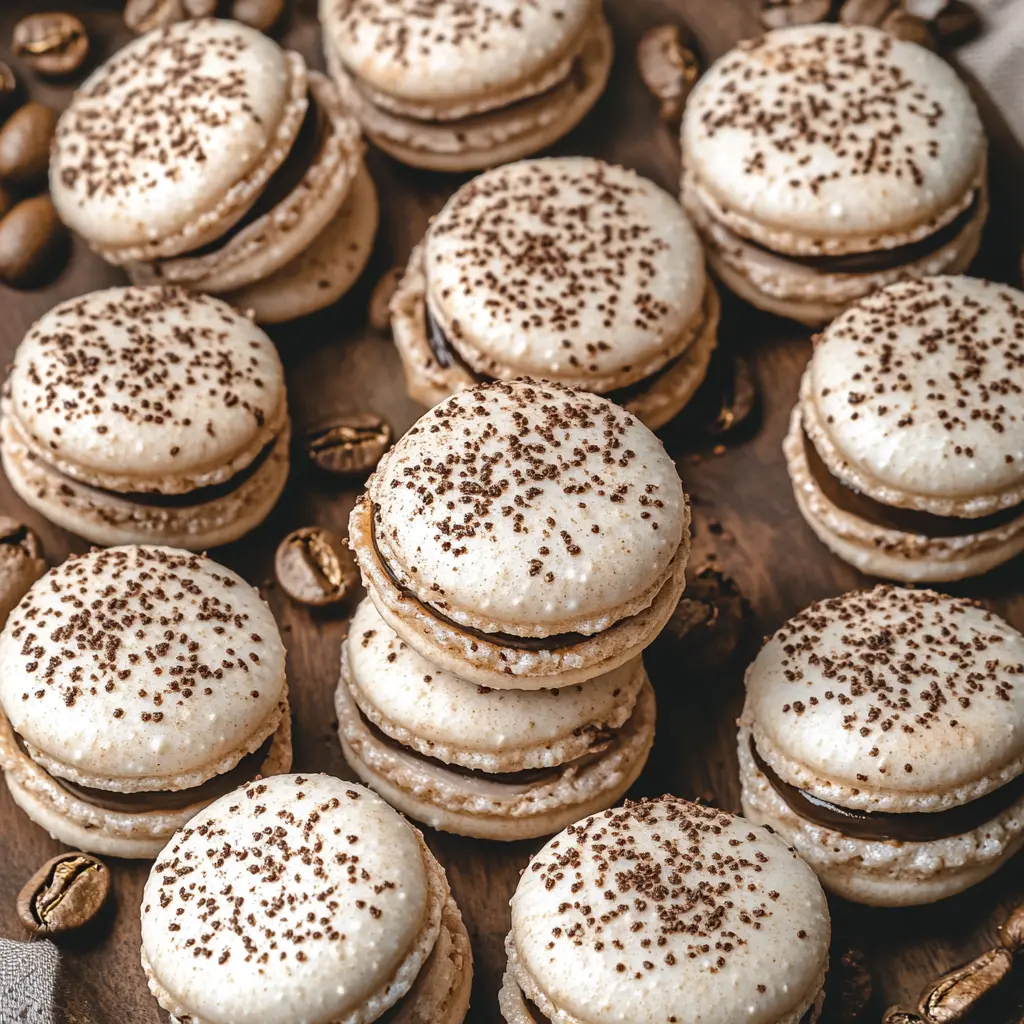
Why You’ll Love These Espresso Macarons
These delicate little treats deliver café-quality flavor without leaving your kitchen. The espresso buttercream filling is rich and smooth, while the shells stay tender with that signature crackly “foot” around the base.
- Impressive but approachable: They look like you spent all day, but the method is straightforward once you get the hang of it
- Deep coffee flavor: Real espresso powder gives both the shells and the filling that bold, grown-up taste
- Perfect for gifting: Pop them in a box and watch faces light up they feel special
- Make-ahead friendly: They actually get better after sitting in the fridge overnight
Key Ingredients and What They Do
Every ingredient here plays a specific role in creating those smooth, glossy shells and creamy centers. Here’s what you’re working with:
| Ingredient | Why It Matters |
|---|---|
| Egg whites | The base of your meringue must be room temperature for best volume |
| Almond flour | Gives macarons that signature tender, slightly chewy texture |
| Espresso powder | Delivers bold coffee flavor in both shells and buttercream |
| Cream of tartar | Stabilizes the meringue so it holds its shape |
| Unsalted butter | Creates a silky, rich buttercream filling |
Pro Tip: Sift your almond flour, powdered sugar, and espresso powder together to avoid lumps it makes a huge difference in how smooth your shells turn out.
How to Make Espresso Macarons (Step by Step)
The process feels a little fussy the first time, but once you see those feet form and the shells peel off cleanly, you’ll be hooked. Here’s the method that works every time:
Start by whisking your egg whites until foamy, then add cream of tartar. Slowly add granulated sugar while the mixer runs, and whip until stiff peaks form. Gently fold in your sifted dry ingredients in two batches this is where patience matters. Keep folding until the batter flows like lava and you can draw a figure-8 without it breaking.
Pipe 1-inch rounds onto your silicone mat, then bang the pan on the counter a few times to release air bubbles. Let them rest for 30-40 minutes until a skin forms on top you should be able to touch them lightly without any batter sticking to your finger. Bake at 300°F for 15 minutes, then let them cool completely before filling.
For the buttercream, beat softened butter with powdered sugar, espresso powder, and vanilla until it’s light and fluffy. Pipe a dollop onto one shell, sandwich with another, and let them mature in the fridge for 12-24 hours.
Troubleshooting Common Macaron Issues
Even after years of testing, I still learn new tricks. Here are the most common hiccups and how to avoid them:
- Hollow shells: Usually means the meringue was overwhipped or the oven temperature was too high
- Cracked tops: The batter wasn’t rested long enough, or there’s too much moisture in the air
- No feet: You probably overmixed the batter past the lava stage, or didn’t let them rest before baking
- Stuck to the mat: They weren’t fully cooled give them more time before peeling
Note: Cleaning your bowl and whisk with lemon juice before starting removes any trace fats that can prevent your meringue from forming properly.
Storage and Serving Tips
The magic happens in the fridge after 12-24 hours, the filling softens the shells just enough to create that perfect chewy-tender bite. Store them in an airtight container in the fridge for up to 5 days.
| Storage Method | How Long | Best For |
|---|---|---|
| Room temperature | 1 hour before serving | Best flavor and texture |
| Refrigerator | Up to 5 days | Maturing and keeping fresh |
| Freezer (unfilled shells) | Up to 1 month | Prep ahead for parties |
Pro Tip: Let them sit at room temperature for about an hour before serving straight from the fridge they can be a bit firm, but at room temp they’re perfectly soft and tender.
Explore additional tasty recipes and kitchen creativity by following me on Pinterest!
FAQs (Espresso Macarons)
Why are my macarons cracking on top?
Cracking usually happens when your oven temperature is too high or the batter is under-mixed. Try lowering your oven by 25 degrees and ensure you’ve properly macaronaged the batter until it flows like thick lava. Also check that your macarons have formed a skin before baking.
How long should I age egg whites for this recipe?
Age your egg whites for 24-48 hours at room temperature, covered with a clean kitchen towel. This helps remove excess moisture and creates more stable meringue. If you’re in a hurry, you can use fresh whites but your success rate may be lower.
What type of espresso powder works best?
Instant espresso powder gives the strongest flavor without adding moisture to your shells. Avoid using regular ground coffee as it won’t dissolve properly. Finely ground espresso beans can work but may create specks in your shells and a grittier texture.
Can I make the shells ahead of time?
Yes, unfilled shells can be stored in an airtight container for up to one week at room temperature. You can also freeze them for up to one month. Just make sure they’re completely cooled before storing and handle them gently to prevent cracking.
Why don’t my macarons have feet?
Missing feet usually means your shells didn’t rest long enough before baking or your oven temperature is off. Let them sit until you can gently touch the surface without batter sticking to your finger. This typically takes 30-60 minutes depending on humidity.
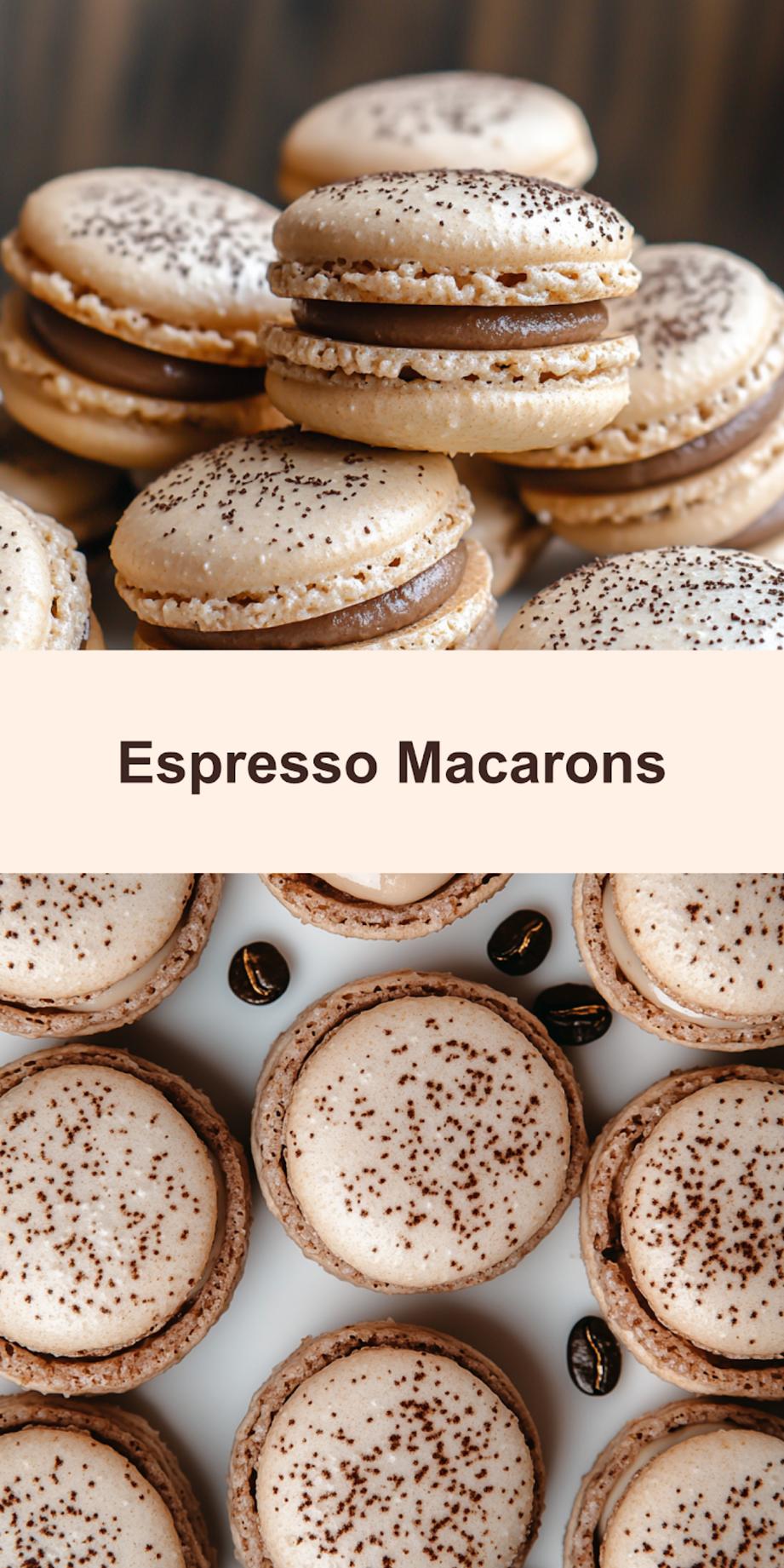
These espresso macarons are worth every gentle fold and patient rest. They bake up tender and glossy, with feet that crinkle just right and a buttercream that melts slowly on your tongue. You’ll love how they turn out bakery-beautiful, deeply flavored, and surprisingly doable once you get your rhythm down.
If you want a little extra richness, try adding a pinch of cinnamon to the buttercream it’s a trick I learned from a pastry chef friend in Portland. You can also freeze the unfilled shells for up to a month and fill them fresh when you’re ready to serve. Let them rest in the fridge overnight before you eat them; that’s when the magic really happens and the flavors meld into something truly special.
I’d love to see how yours turn out snap a photo and tag me so I can cheer you on. Did you grow up sneaking macarons from a favorite bakery, or is this your first time making them at home? Either way, tuck this recipe away for your next coffee date or cozy afternoon. Make a batch, share with someone you love, and let the kitchen smell like a little French café.